0去购物车结算
购物车中还没有商品,赶紧选购吧!
当前位置: > Double Helix Methodology in Think Tanks(智库双螺旋法理论)
相同语种的商品

销售排行榜

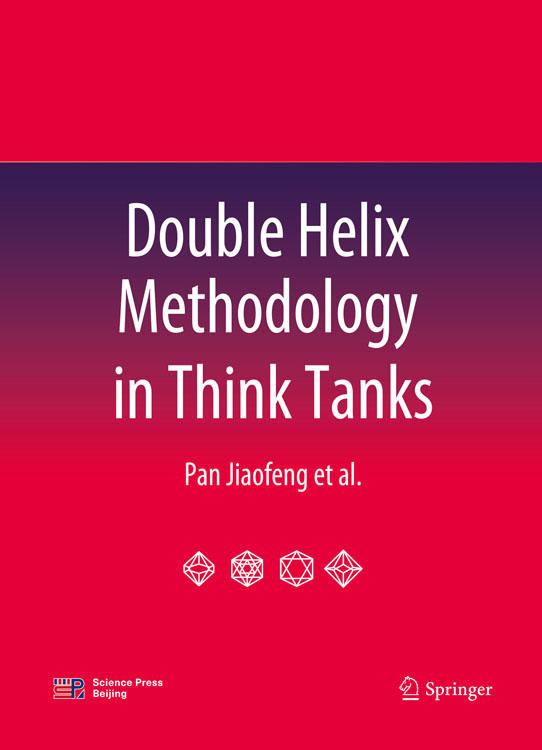
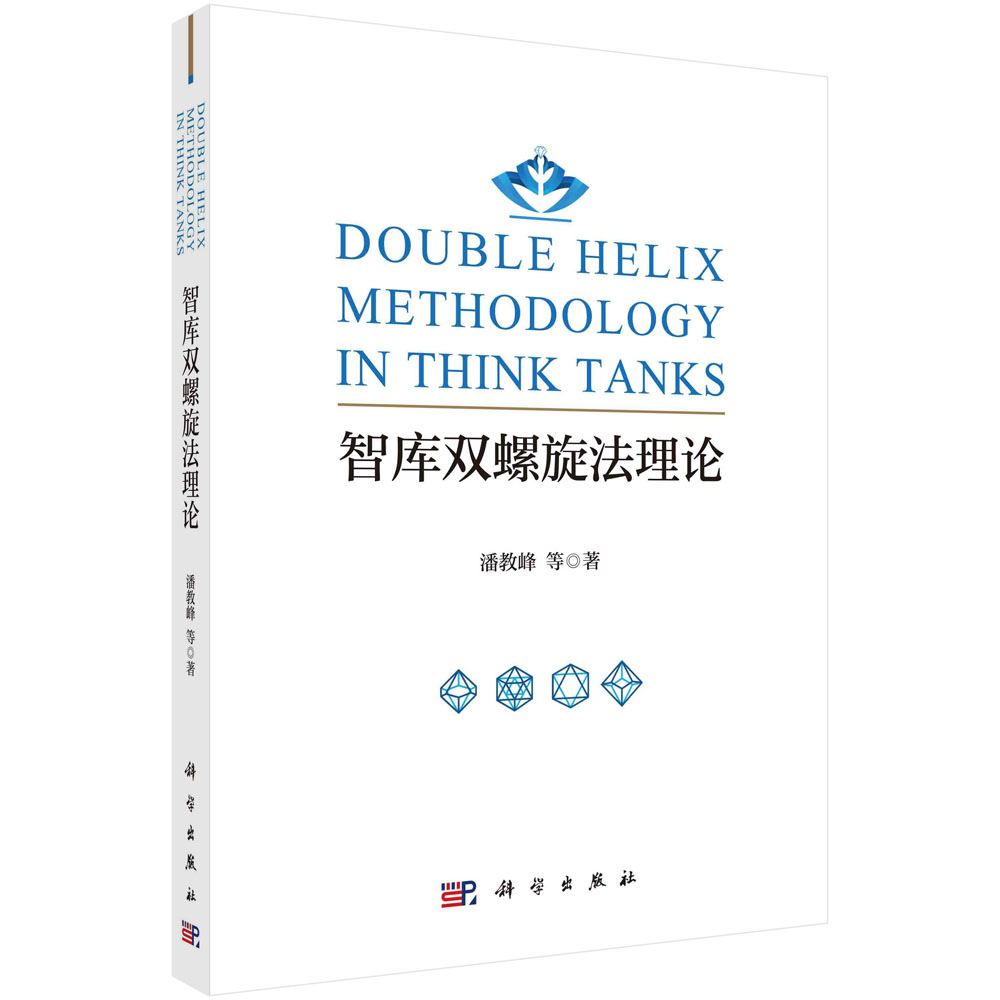
Double Helix Methodology in Think Tanks(智库双螺旋法理论)

联系编辑
 
标题:
 
内容:
 
联系方式:
 
  
Double Helix Methodology in Think Tanks(智库双螺旋法理论)
  • 书号:9787030828835
    作者:潘教峰
  • 外文书名:
  • 装帧:平装
    开本:B5
  • 页数:334
    字数:450000
    语种:zh-Hans
  • 出版社:科学出版社
    出版时间:2025-09-01
  • 所属分类:
  • 定价: ¥238.00元
    售价: ¥188.02元
  • 图书介质:
    纸质书 按需印刷

  • 购买数量: 件  可供
  • 商品总价:

相同系列
全选

内容介绍

样章试读

用户评论

全部咨询

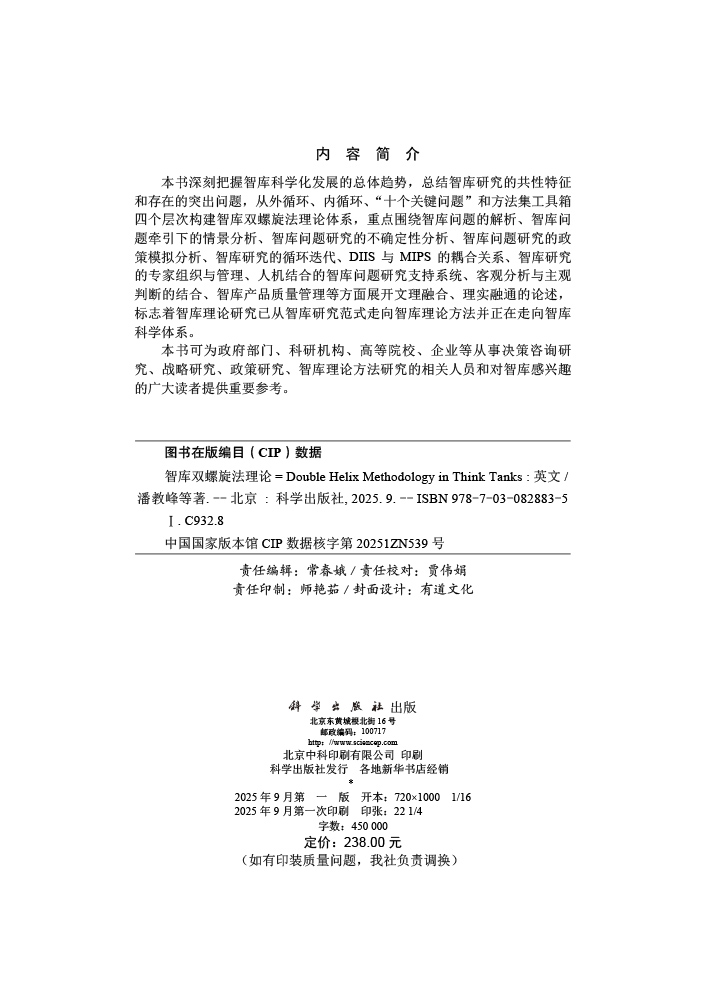
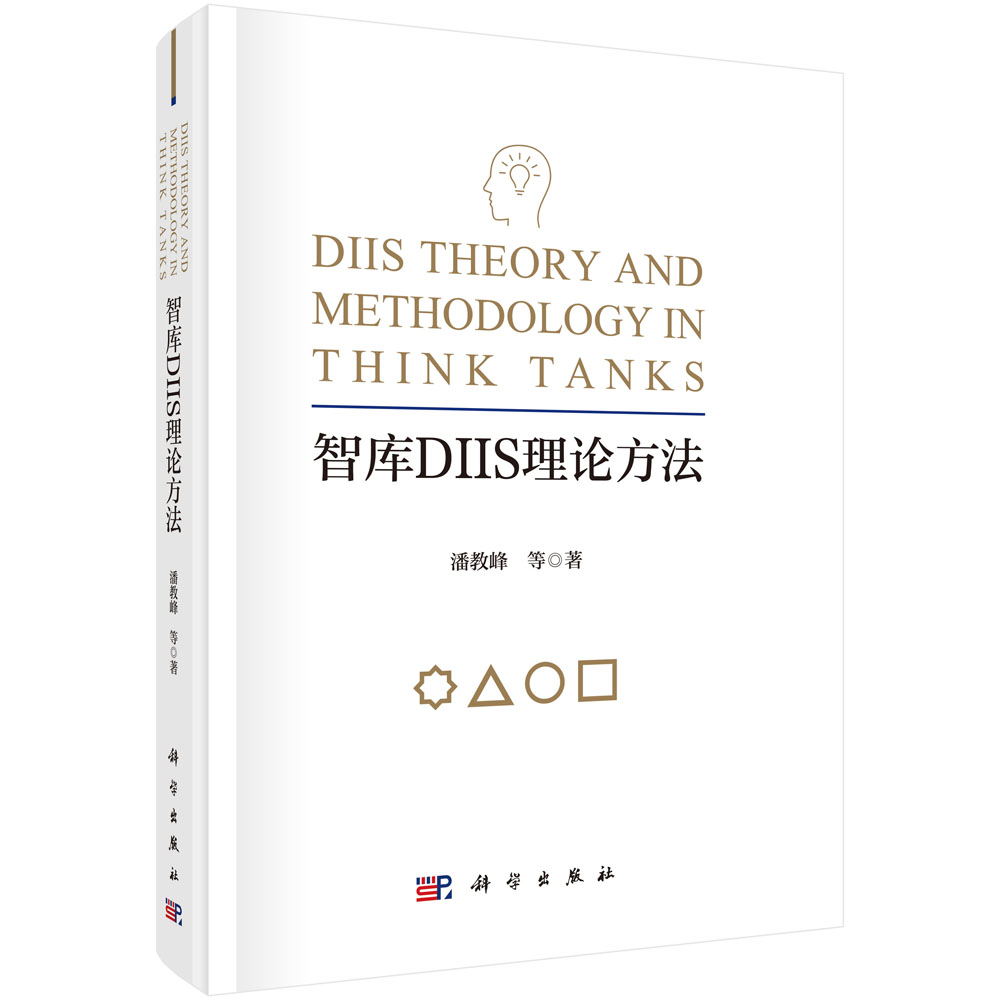
本书深刻把握智库科学化发展的总体趋势,总结智库研究的共性特征和存在的突出问题,从外循环、内循环、“十个关键问题”和方法集工具箱四个层次构建智库双螺旋法理论体系,重点围绕智库问题的解析、智库问题牵引下的情景分析、智库问题研究的不确定性分析、智库问题研究的政策模拟分析、智库研究的循环迭代、DIIS与MIPS的耦合关系、智库研究的专家组织与管理、人机结合的智库问题研究支持系统、客观分析与主观判断的结合、智库产品质量管理等方面展开文理融合、理实融通的论述,标志着智库理论研究已从智库研究范式走向智库理论方法并正在走向智库科学体系。
样章试读
  • 暂时还没有任何用户评论
总计 0 个记录,共 1 页。 第一页 上一页 下一页 最末页

全部咨询(共0条问答)

  • 暂时还没有任何用户咨询内容
总计 0 个记录,共 1 页。 第一页 上一页 下一页 最末页
用户名: 匿名用户
E-mail:
咨询内容:

目录

  • Contents
    Preface
    Part Ⅰ An Overview of the Double Helix Methodology in Think Tanks
    Chapter 1 Connotation and Development of Think Tanks 3
    1.1 Connotation and Functions of Think Tanks 3
    1.2 Construction and Development of Think Tanks 7
    1.3 Practice of High-end Think Tank Construction in China and the Future Development 14
    References 18
    Chapter 2 Theory Structure of the Double Helix Methodology in Think Tanks 20
    2.1 Main Content of the Double Helix Methodology in Think Tanks 20
    2.2 Ten Key Issues of the Double Helix Methodology in Think Tanks 35
    2.3 Four-layered Model of the Double Helix Methodology in Think Tanks 54
    2.4 Summary 66
    References 67
    Chapter 3 Theoretical Value and Significance of the Double Helix Methodology in Think Tanks 69
    3.1 Promoting the Six Transitions in Think Tank Research 69
    3.2 Building an Academic Foundation for Think Tank Research 82
    3.3 Providing Input and Directions for the Construction of the Think Tank Discipline 113
    3.4 Summary 117
    References 118
    Part Ⅱ The Key Issues of the Double Helix Methodology in Think Tanks
    Chapter 4 Decomposition of Think Tank Problems 121
    4.1 Defining the Problem 122
    4.2 Describing the Problem 125
    4.3 Constructing the Framework 127
    4.4 Formation of the Sub-problem Set 130
    4.5 Case Study 132
    4.6 Summary 136
    References 137
    Chapter 5 Scenario Analysis of Think Tank Problems 139
    5.1 The Importance of Scenario Analysis in the Study of Think Tank Issues 139
    5.2 The Role of Scenario Analysis in Think Tank Research 142
    5.3 Key Elements of Scenario Analysis and Its Methods 143
    5.4 Processes of Scenario Analysis and Its Functions in the DIIS Framework 147
    5.5 The Role of Scenario Analysis in the Realization of MIPS Objectives 152
    5.6 Summary 158
    References 159
    Chapter 6 Uncertainty Analysis in Think Tank Problem Study 161
    6.1 The Connotation of Uncertainty 162
    6.2 Uncertainty in Think Tank Problems and the Double Helix Methodology in Think Tanks 164
    6.3 Uncertainty Analysis Methods for Think Tank Problems 167
    6.4 Summary 172
    References 173
    Chapter 7 Policy Simulation Analysis in Think Tank Problem Research 175
    7.1 Policy Simulation in Think Tank Problem Research 175
    7.2 Advances in Policy Simulation for Problem Research in Think Tanks at Home and Abroad 178
    7.3 Decomposition of Policy Simulation Process on the Basis of the DIIS Process Convergence Method and the MIPS Logic Layer Method 183
    7.4 Representative Methods of Policy Simulation in Think Tank Problem Research 197
    7.5 Summary 201
    References 203
    Chapter 8 Cyclic Iteration of Think Tank Research 204
    8.1 Overview of the Cyclic Iteration in Think Tank Research 204
    8.2 Triggering Situations and Stages Involved in the Cyclic Iteration of the Double Helix Methodology in Think Tanks 209
    8.3 Cyclic Iteration Process of the Double Helix Methodology in Think Tanks 216
    8.4 Case Study 230
    8.5 Summary 232
    References 232
    Chapter 9 DIIS and MIPS Coupling 234
    9.1 Characteristics of DIIS-MIPS Coupling 235
    9.2 Structure of DIIS-MIPS Coupling 237
    9.3 DIIS-MIPS Coupling in Research Practice 245
    9.4 Summary 249
    References 249
    Chapter 10 Organization and Management of Think Tank Experts 250
    10.1 The Role of Think Tank Experts in Think Tank Research 251
    10.2 Expert Functions and Knowledge Characteristics 254
    10.3 Expert Selection 257
    10.4 Expert Participation 260
    10.5 Summary 266
    References 267
    Chapter 11 Human-machine Research Support System in Think Tank Research 268
    11.1 Necessity for the Construction of Decision Support System in Think Tanks 268
    11.2 Main Types of Decision Support Systems in Think Tanks 272
    11.3 Research Hotspots of Think Tank Decision Support Systems 276
    11.4 Architecture of the Decision Support System in the Framework of Double Helix Methodology in Think Tanks 278
    11.5 Summary 292
    References 292
    Chapter 12 Combination of Objective Analysis and Subjective Judgment 293
    12.1 The Significance of Combining Objective Analysis and Subjective Judgment 294
    12.2 Concept of Combining Objective Analysis and Subjective Judgment 295
    12.3 Principles, Criteria and Methods of Combining Objective Analysis and Subjective Judgment 300
    12.4 The Application of Combined Objective Analysis and Subjective Judgment 303
    12.5 The Progress of Combining Objective Analysis and Subjective Judgment in Different Domain Perspectives 309
    12.6 Summary 312
    References 313
    Chapter 13 Product Quality Management 315
    13.1 Characteristics and Classification of Think Tank Products 315
    13.2 Quality Requirements for Think Tank Products 320
    13.3 Quality Management of Think Tank Products 329
    13.4 Summary 333
    References 334
帮助中心
公司简介
联系我们
常见问题
新手上路
发票制度
积分说明
购物指南
配送方式
配送时间及费用
配送查询说明
配送范围
快递查询
售后服务
退换货说明
退换货流程
投诉或建议
版权声明
经营资质
营业执照
出版社经营许可证