0去购物车结算
购物车中还没有商品,赶紧选购吧!
当前位置: > Theory of Elasticity Basic Concepts and Formulations(弹性力学:基础概念及基本公式)
销售排行榜

浏览历史

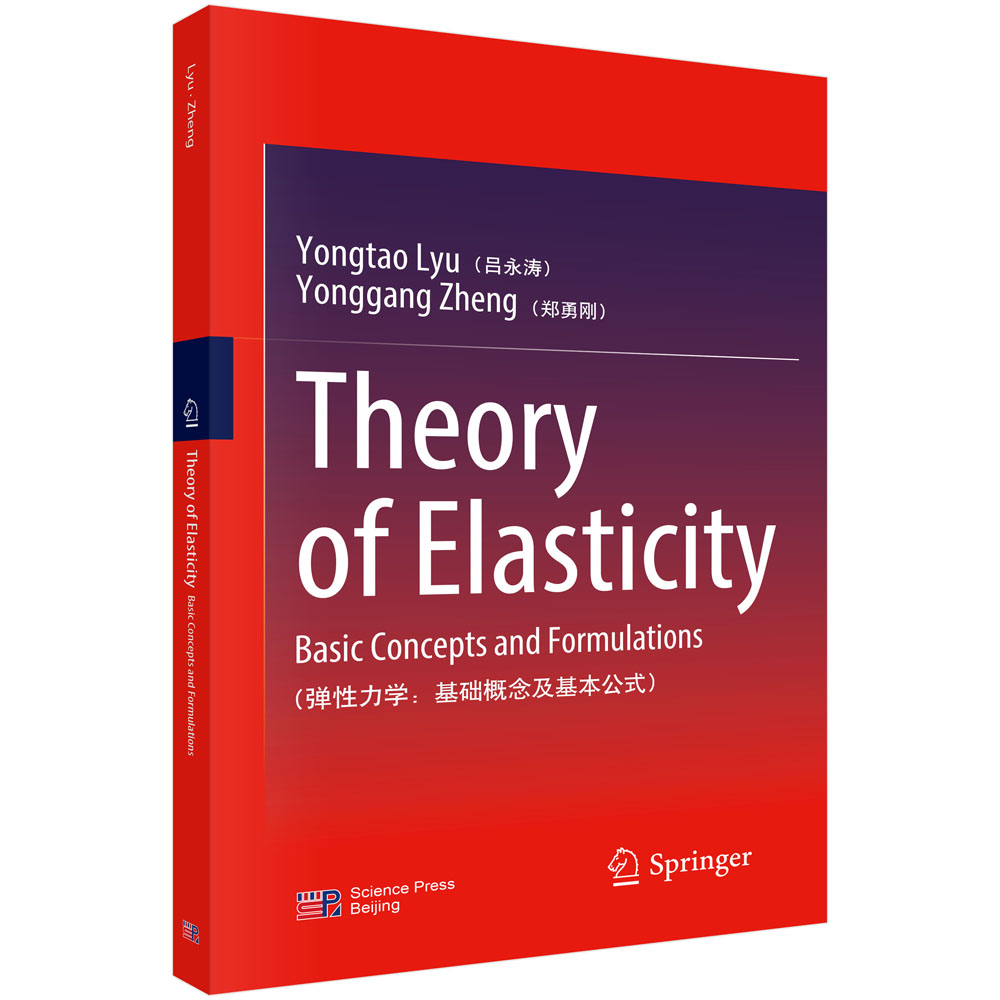
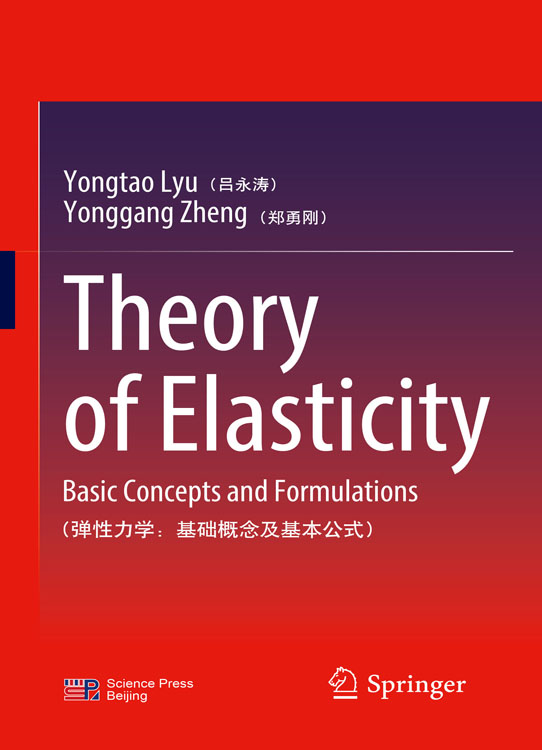
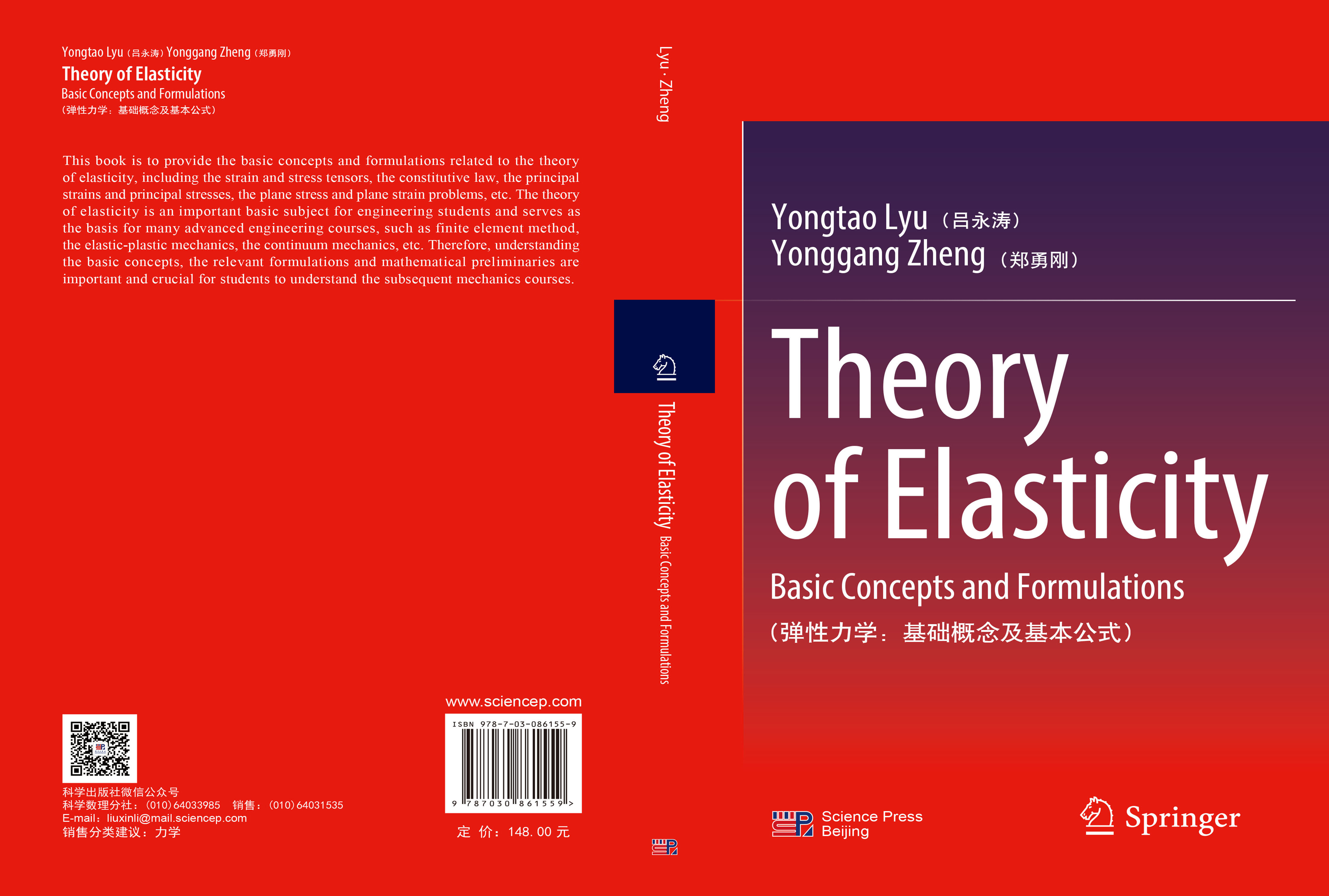
Theory of Elasticity Basic Concepts and Formulations(弹性力学:基础概念及基本公式)

联系编辑
 
标题:
 
内容:
 
联系方式:
 
  
Theory of Elasticity Basic Concepts and Formulations(弹性力学:基础概念及基本公式)
  • 书号:9787030861559
    作者:吕永涛,邓阳刚
  • 外文书名:
  • 装帧:平装
    开本:B5
  • 页数:195
    字数:
    语种:en
  • 出版社:科学出版社
    出版时间:2026-06-01
  • 所属分类:
  • 定价: ¥148.00元
    售价: ¥116.92元
  • 图书介质:
    纸质书

  • 购买数量: 件  可供
  • 商品总价:

相同系列
全选

内容介绍

样章试读

用户评论

全部咨询

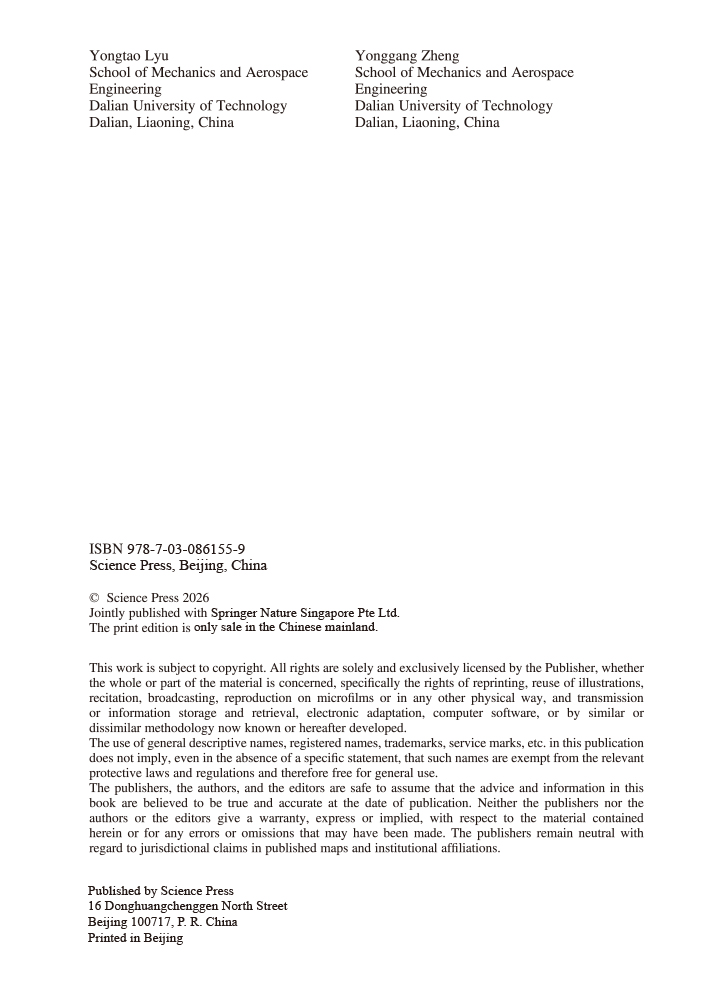
本书首先介绍了弹力力学中的基本概念及基本假设,为后续章节中的讲解做铺垫,随后,重点介绍了张量分析中的重要运算法则,为后续三维应力、本构关系等的张量表达打下了基础。在第二章及第三章中,重点讲解三维应变及三维应力的定义、基本公式及基本运算,随后在第四章中,重点推导了不同类型材料的三维本构关系及重要弹性常数的定义及运算。在这些知识的基础上,第五章介绍弹性力学中求解一般问题的基本方法及相关重要概念的定义,最后,第六章讲解了将三维问题简化为二维问题的过程、方法及二维问题中的基本方程等。
样章试读
  • 暂时还没有任何用户评论
总计 0 个记录,共 1 页。 第一页 上一页 下一页 最末页

全部咨询(共0条问答)

  • 暂时还没有任何用户咨询内容
总计 0 个记录,共 1 页。 第一页 上一页 下一页 最末页
用户名: 匿名用户
E-mail:
咨询内容:

目录

  • Contents
    1 Introduction and Mathematical Preliminaries 1
    1.1 Introduction 1
    1.2 Basic Concepts in this Textbook 2
    1.3 Basic Assumptions in this Textbook 3
    1.4 Mathematical Preliminaries 4
    1.4.1 Definitions for Scalar, Vector, Matrix and Tensor 4
    1.4.2 Index Notation 5
    1.4.3 Kronecker Delta and Alternating Symbol 8
    1.4.4 Cartesian Tensors 12
    1.4.5 Principal Values and Directions for Symmetric Second-Order Tensors 15
    1.4.6 Vector, Matrix, and Tensor Algebra 19
    1.4.7 Calculus of Cartesian Tensors 21
    1.4.8 Vectors 24
    1.4.9 Change of Basis 30
    1.4.10 Symmetry and Skew-Symmetry 34
    1.4.11 Derivatives and Divergence 36
    1.4.12 Even and Odd Functions 38
    1.4.13 Index Notation and Summation Convention 39
    2 Strain 43
    2.1 Introduction 43
    2.2 Strain and displacement 44
    2.3 Geometrically Nonlinear Problems 48
    2.3.1 Classification of Geometrically Nonlinear Problems 48
    2.3.2 Definition of Strains in Geometrically Nonlinear Problems 49
    2.3.3 Definition of Deformation Gradient 52
    2.4 Relative Displacement Tensor 59
    2.4.1 Physical Meaning of the Strain and Rotation Tensors 62
    2.5 Strain Transformation 64
    2.6 Calculation of Principal Strains 66
    2.7 Some Strain Definitions 67
    2.7.1 Spherical and Deviatoric Strains 67
    2.7.2 Volumetric Strains 67
    2.8 Strain Compatibility 69
    3 Stress 75
    3.1 Introduction 75
    3.2 Some Definitions Related to Stress 76
    3.2.1 Body and Surface Forces 76
    3.2.2 Traction Vector and Stress Tensor 77
    3.2.3 Type of Stress 82
    3.3 Stress Transformation 84
    3.3.1 Stress Transformation Using the Tensor Operation 84
    3.3.2 Stress Transformation Using the Equilibrium Conditions 85
    3.3.3 Stress Transformation Induced by the Change of Coordinate System 88
    3.4 Equilibrium Equations 94
    3.5 Calculation of the Principal Stress 98
    3.6 Calculation of Maximal Shear Stress 103
    3.7 Some Stress Definitions 105
    4 Constitutive Relation 109
    4.1 Introduction 109
    4.2 Material Models 110
    4.3 Generalized Hooke's Law 111
    4.4 Constitutive Relation for Elastic Solids 115
    4.4.1 Material Symmetry 118
    4.4.2 Independent Elastic Constants for Elastic Solids 124
    4.5 Constitutive Relation for Isotropic Elastic Solids 133
    4.6 Physical Meaning of Elastic Constants 135
    4.6.1 Simple Tension 136
    4.6.2 Pure Shear 136
    4.6.3 Hydrostatic compression 137
    4.7 Relationships Between Elastic Constants 138
    4.7.1 Simple Tension 139
    4.7.2 Pure Shear 140
    4.7.3 Hydrostatic Compression 140
    5 Formulation and Solution Strategies 143
    5.1 Introduction 143
    5.2 Relevant Concepts 144
    5.2.1 Type of Loads 144
    5.2.2 Reaction Forces and Moments 144
    5.2.3 Internal Forces and Moments 145
    5.3 Boundary Conditions and Problem Classifications 147
    5.3.1 Stress Formulation 153
    5.3.2 Displacement Formulation 155
    5.3.3 Principle of Superposition 156
    5.3.4 Saint-Venant's Principle 157
    5.4 General Solution Strategies 159
    5.4.1 Direct Method 159
    5.4.2 Inverse Method 161
    5.4.3 Semi-inverse Method 161
    5.4.4 Analytical Solution Procedures 162
    5.4.5 Approximate Solution Procedures 163
    5.4.6 Numerical Solution Procedures 163
    5.5 Strain Energy and Related Principles 164
    5.5.1 Strain Energy 165
    5.5.2 Decomposition of Strain Energy 169
    5.5.3 Bounds on Elastic Constants 170
    5.6 Principle of Virtual Work 172
    5.7 Principles of Minimum Potential and Complementary Energy 175
    5.8 Rayleigh-Ritz Method 179
    6 Two Dimensional Problems 183
    6.1 Introduction 183
    6.2 Plane Stress Problem 183
    6.2.1 The Simplification Conditions 183
    6.2.2 The Strain Field 185
    6.2.3 The Displacement Field 187
    6.3 Plane Strain Problem 188
    6.3.1 The Simplification Condition 188
    6.3.2 The Strain and Stress Fields 189
    6.4 Conversion Between Plane Stress and Plane Strain Problems 192
    Bibliography 195
帮助中心
公司简介
联系我们
常见问题
新手上路
发票制度
积分说明
购物指南
配送方式
配送时间及费用
配送查询说明
配送范围
快递查询
售后服务
退换货说明
退换货流程
投诉或建议
版权声明
经营资质
营业执照
出版社经营许可证