0去购物车结算
购物车中还没有商品,赶紧选购吧!
当前位置: > Prognostics and Health Management for Intelligent Electromechanical Systems(智能机电系统PHM)
销售排行榜

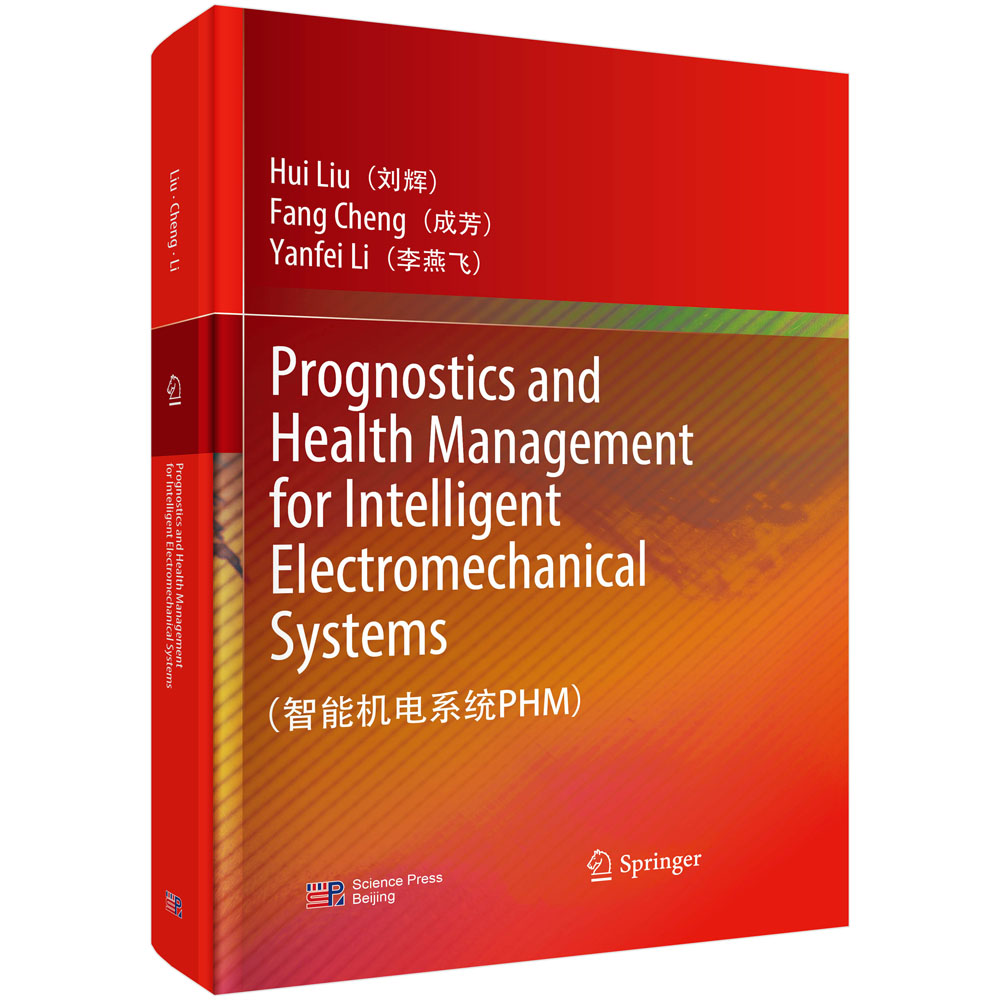
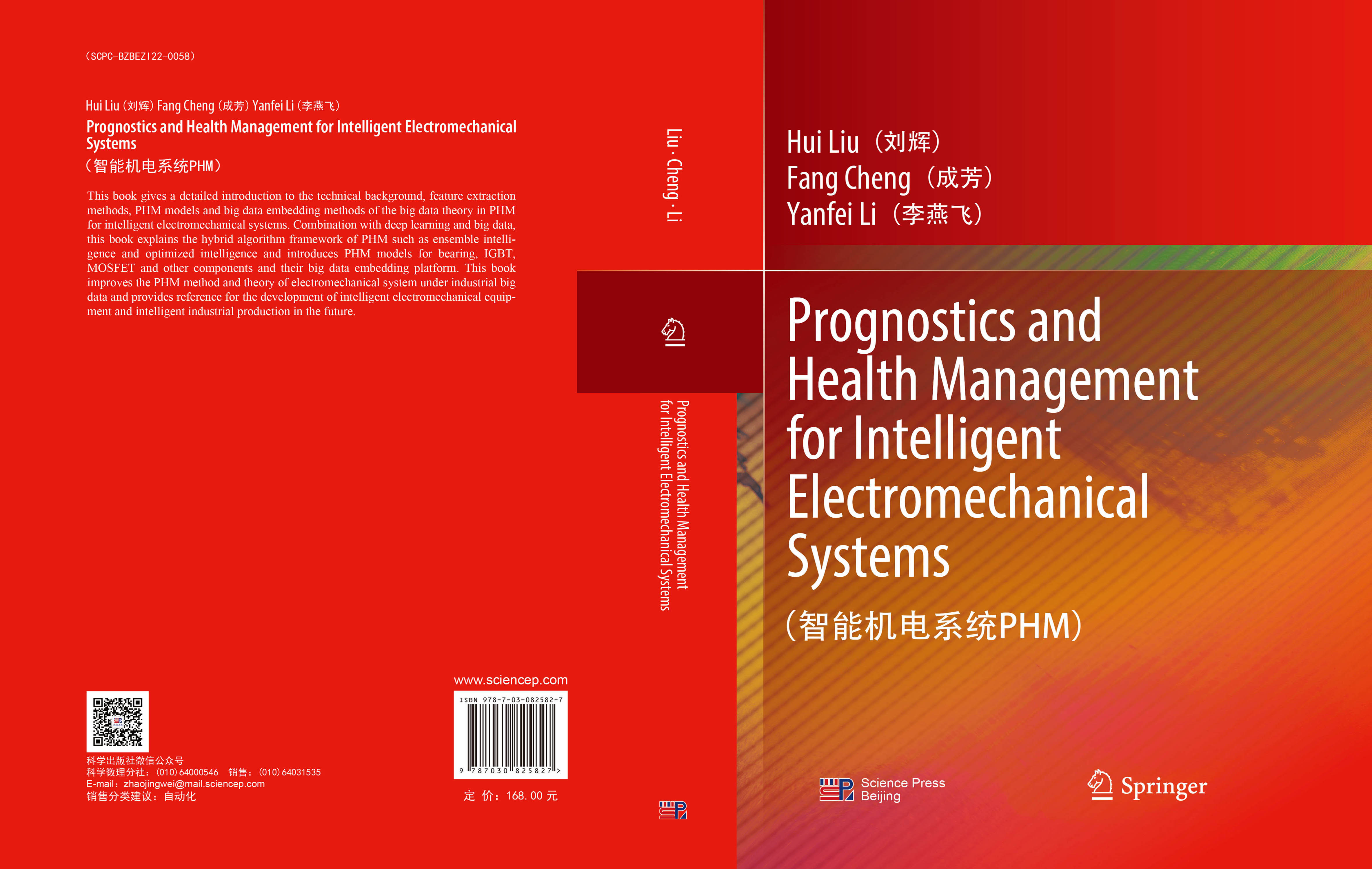
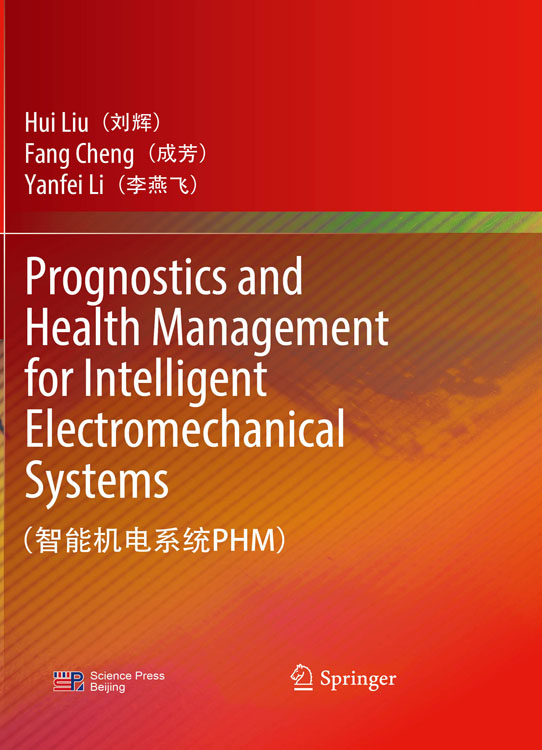
Prognostics and Health Management for Intelligent Electromechanical Systems(智能机电系统PHM)

联系编辑
 
标题:
 
内容:
 
联系方式:
 
  
Prognostics and Health Management for Intelligent Electromechanical Systems(智能机电系统PHM)
  • 书号:9787030825827
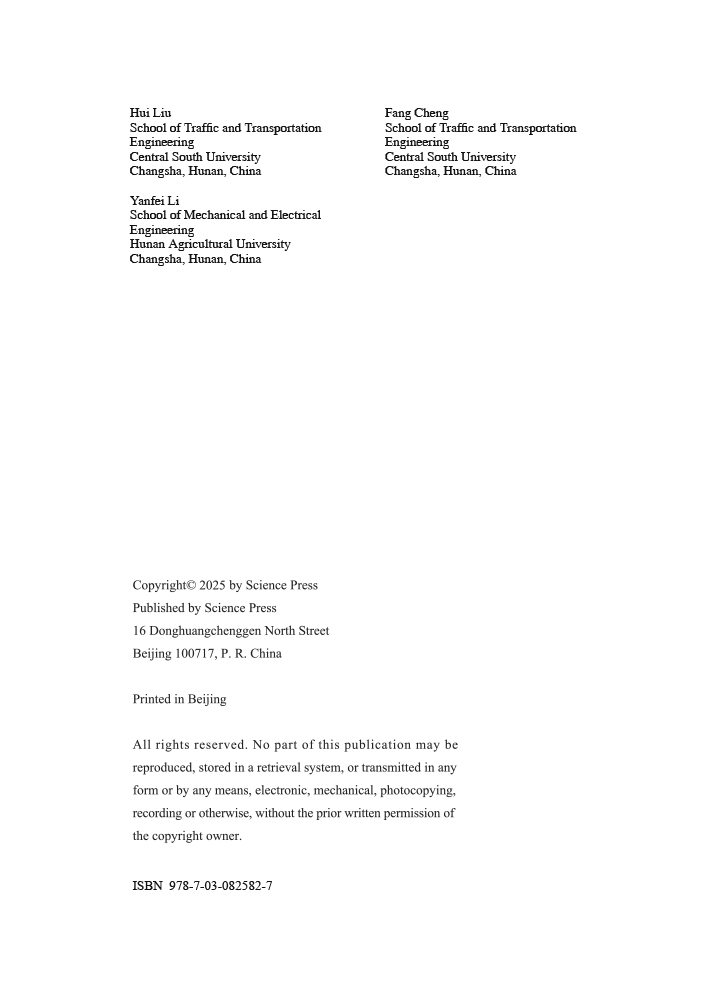
    作者:刘辉,成芳,李燕飞
  • 外文书名:
  • 装帧:圆脊精装
    开本:B5
  • 页数:208
    字数:145000
    语种:en
  • 出版社:科学出版社
    出版时间:2025-09-01
  • 所属分类:
  • 定价: ¥168.00元
    售价: ¥126.00元
  • 图书介质:
    纸质书 按需印刷

  • 购买数量: 件  可供
  • 商品总价:

相同系列
全选

内容介绍

样章试读

用户评论

全部咨询

机电系统是大部分电气机械设备的基本功能基础,机电系统的故障诊断与健康管理(PHM)对整个机械设备的安全运行具有至关重要的意义。本书结合大数据技术在机电系统PHM中的应用,全面介绍了智能机电系统PHM的相关理论、关键技术和应用实例。全书分为三篇12章,第一篇从机电系统PHM重要性进行分析,介绍了智能机电系统及其研究现状和方法,并介绍智能机电系统PHM嵌入大数据的必要性;第二篇以轴承为例介绍机械系统的PHM大数据方法,包括:第2章介绍轴承振动信号的特征提取方法,第3章介绍轴承剩余寿命的集成智能预测方法,第4章介绍轴承故障集成智能诊断方法,第5章介绍轴承剩余寿命的深度预测方法,第6章介绍轴承故障深度诊断方法,第7章介绍将机械系统PHM大数据嵌入方法;第三篇介绍电气系统的PHM大数据方法,包括:第8章介绍IGBT的剩余寿命优化预测方法,第9章介绍MOSFET剩余寿命分解预测方法,第10章介绍电容剩余寿命的误差修正预测方法,第11章介绍电源剩余寿命的滤波修正预测方法,第12章以电源为例介绍电气系统PHM大数据嵌入方法。 各章内容都具有实例分析,帮助读者深入理解相关内容,激发灵感。
样章试读
  • 暂时还没有任何用户评论
总计 0 个记录,共 1 页。 第一页 上一页 下一页 最末页

全部咨询(共0条问答)

  • 暂时还没有任何用户咨询内容
总计 0 个记录,共 1 页。 第一页 上一页 下一页 最末页
用户名: 匿名用户
E-mail:
咨询内容:

目录

  • Contents
    1 Introduction 1
    1.1 Overview of Intelligent Electromechanical System 2
    1.1.1 High-Speed Trains 2
    1.1.2 Robots 4
    1.1.3 New Energy Vehicles 5
    1.2 Research Status of Prognostics and Health Management in Intelligent Electromechanical System 6
    1.2.1 Fault Diagnosis 7
    1.2.2 Remaining Useful Life Prediction 8
    1.3 Methodology of Prognostics and Health Management in Intelligent Electromechanical System 10
    1.3.1 Feature Extraction Method 10
    1.3.2 Prediction Model 11
    1.3.3 Error Modification Model 13
    1.4 The Necessity of Big Data Embedding in Prognostics and Health Management for Intelligent Electromechanical Systems 14
    1.5 Scope of the Book 16
    References 18
    2 Feature Extraction of Bearing Vibration Signal 25
    2.1 Introduction 25
    2.2 Data Acquisition 26
    2.3 Frequency Domain Feature Extraction 28
    2.3.1 The Theoretical Basis of Continuous Wavelet Transform 28
    2.3.2 Feature Extraction 31
    2.3.3 Feature Evaluation 33
    2.4 Decomposition-Based Feature Extraction 35
    2.4.1 The Theoretical Basis of Variational Modal Decomposition 35
    2.4.2 Feature Extraction 36
    2.4.3 Feature Evaluation 38
    2.5 Deep Learning Feature Extraction 40
    2.5.1 The Theoretical Basis of Convolutional Neural Network 40
    2.5.2 Feature Extraction 41
    2.5.3 Feature Evaluation 43
    References 45
    3 Ensemble Intelligent Diagnosis for Bearing Faults 49
    3.1 Introduction 49
    3.2 Data Acquisition 50
    3.3 Ensemble Diagnostic Model Based on Multi-objective Grey Wolf Optimizer for Bearing Faults 50
    3.3.1 The Theoretical Basis of Empirical Wavelet Transform 50
    3.3.2 The Theoretical Basis of Random Tree 53
    3.3.3 The Theoretical Basis of Multi-objective Grey Wolf Optimizer 54
    3.3.4 Experimental Result and Analysis 55
    3.4 Boosting Ensemble Diagnostic Model for Bearing Faults 60
    3.4.1 The Theoretical Basis of Empirical Mode Decomposition 60
    3.4.2 The Theoretical Basis of Boosting 60
    3.4.3 The Theoretical Basis of the Osprey-Cauchy-Sparrow Search Algorithm 63
    3.4.4 Experimental Result and Analysis 65
    3.5 Model Performance Comparison 69
    3.6 Conclusions 70
    References 71
    4 Deep Learning Prediction for Bearing Remaining Useful Life 73
    4.1 Introduction 73
    4.2 Data Acquisition 74
    4.3 BiLSTM-Based Predictive Model for Bearing Remaining Useful Life 77
    4.3.1 The Theoretical Basis Convolutional Neural Network 77
    4.3.2 The Theoretical Basis Bidirectional Long Short-Term Memory 79
    4.3.3 Experimental Result and Analysis 80
    4.4 GRU-Based Predictive Model for Bearing Remaining Useful Life 82
    4.4.1 The Theoretical Basis Gate Recurrent Unit 82
    4.4.2 The Theoretical Basis Attention 83
    Contents v
    4.4.3 Experimental Result and Analysis 84
    4.5 Model Performance Comparison 86
    4.6 Conclusions 87
    References 89
    5 Optimization Based Prediction for IGBT Remaining Useful Life 91
    5.1 Introduction 91
    5.2 Data Acquisition 92
    5.3 Predictive Model for IGBT Remaining Useful Life Based on Particle Swarm Optimization 92
    5.3.1 Health Indicator Based on Particle Swarm Optimization 92
    5.3.2 RUL Prediction Based on the Similarity 95
    5.4 Predictive Model for IGBT Remaining Useful Life Based on Bat Optimization 96
    5.5 Model Performance Comparison 97
    5.6 Application in Front-Wheel Steering Mobile Robot Fault-Tolerant Control 99
    5.6.1 Front-Wheel Steering Mobile Robot System 99
    5.6.2 Control Design 101
    5.6.3 Simulation Results 103
    5.7 Conclusions 109
    References 110
    6 Decomposition Based Prediction for MOSFET Remaining Useful Life 113
    6.1 Introduction 113
    6.2 Data Acquisition 114
    6.3 Predictive Model for MOSFET Remaining Useful Life Based on Wavelet Packet Decomposition 114
    6.3.1 Feature Extraction Based on Wavelet Packet Decomposition 114
    6.3.2 The Theoretical Basis of Autoregressive Integrated Moving Average Model 116
    6.3.3 Experimental Result and Analysis 119
    6.4 Predictive Model for MOSFET Remaining Useful Life Based on Complete Ensemble Empirical Mode Decomposition 120
    6.4.1 Feature Extraction Based on Complete Ensemble Empirical Mode Decomposition 120
    6.4.2 The Theoretical Basis of Long Short-Term Memory Model 121
    6.4.3 Experimental Result and Analysis 123
    6.5 Model Performance Comparison 124
    6.6 Applications in Wheeled Mobile Robot Fault-Tolerant Control 126
    6.6.1 Fault-Tolerant Control 126
    6.6.2 Applications in Wheeled Mobile Robot 129
    6.6.3 Performance Analysis 131
    6.7 Conclusions 134
    References 134
    7 Linear Networks and Temporal Convolution Based Prediction for Capacitor Remaining Useful Life 137
    7.1 Introduction 137
    7.2 Data Acquisition 138
    7.3 Predictive Model for Capacitor Remaining Useful Life Based on MSD-Mixer 139
    7.3.1 The Theoretical Basis Linear Network 139
    7.3.2 The Theoretical Basis of MSD-Mixer 142
    7.3.3 Experimental Result and Analysis 144
    7.4 Predictive Model for Capacitor Remaining Useful Life Based on TimesNet 145
    7.4.1 The Theoretical Basis of Temporal Convolutional Networks 145
    7.4.2 The Theoretical Basis of TimesNet 149
    7.4.3 Experimental Result and Analysis 151
    7.5 Model Performance Comparison 152
    7.6 Conclusions 154
    References 155
    8 Remaining Useful Life Prediction of Power Supply Based on Range-Extended New Energy Vehicles 159
    8.1 Introduction 159
    8.2 Data Acquisition 160
    8.3 Predictive Model for Power Supply Remaining Useful Life Based on FEDformer 165
    8.3.1 The Theoretical Basis of Transformer 165
    8.3.2 The Theoretical Basis of FEDformer 168
    8.3.3 Experimental Result and Analysis 170
    8.4 Predictive Model for Power Supply Remaining Useful Life Based on Preformer 173
    8.4.1 The Theoretical Basis of Multi-scale Time–Frequency Analysis of Power Batteries 173
    8.4.2 The Theoretical Basis of Preformer 175
    8.4.3 Experimental Result and Analysis 177
    8.5 Model Performance Comparison 179
    8.6 Conclusions 181
    References 182
    9 Big Data Embedding in PHM for Electromechanical System 185
    9.1 Introduction 185
    9.2 Construction of Big Data Storage Platform 187
    9.2.1 Data Source and Acquisition 187
    9.2.2 Data Storage and Management Technology 189
    9.3 Distributed Predictive Model for Electromechanical System 193
    9.3.1 Distributed Computing Framework 195
    9.3.2 Case Study 197
    9.3.3 Challenges and Analysis 204
    9.4 Conclusions 206
    References 206
帮助中心
公司简介
联系我们
常见问题
新手上路
发票制度
积分说明
购物指南
配送方式
配送时间及费用
配送查询说明
配送范围
快递查询
售后服务
退换货说明
退换货流程
投诉或建议
版权声明
经营资质
营业执照
出版社经营许可证